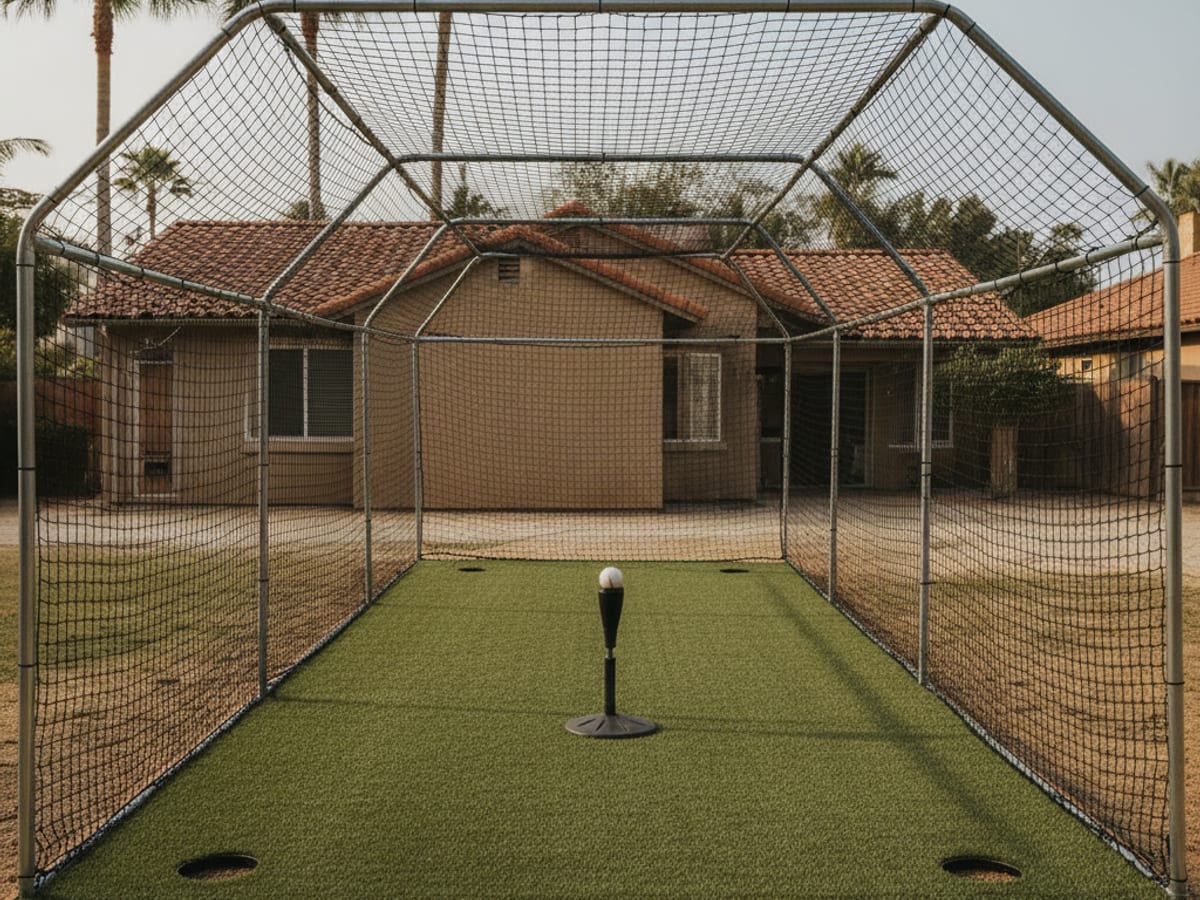
Sports turf installation in San Diego runs $12 to $22 per square foot installed for a residential athletic field, more if you add a shock pad. The cost depends on what you’ll play, how much padding you need under it, and how the base handles our soil. Real sports turf is built differently than landscape grass, and in our climate the differences matter more than most national brands admit.
What makes sports turf different
Landscape turf is built to look good. Sports turf is built to take a beating and keep players safe.
A few things separate it:
- Lower, denser pile. Sports turf usually runs 1 to 1.5 inches with tightly packed fibers, so the ball rolls true and cleats grip without catching.
- Higher face weight. More fiber per square foot means it holds up to pivots, slides, and daily use without matting down.
- Shock pad layer. Under the turf goes a foam pad that absorbs impact. This is the safety layer, and it’s where a lot of cheap installs cut corners.
- Specific infill. Sand and rubber, or coated sand, tuned to the sport. Too little infill and the surface gets hard. Too much and it plays slow.
The national turf companies sell the same field system whether you’re in Phoenix or Portland. San Diego has its own demands, and a field built for somewhere else won’t hold up the same way here.
Heat is the first San Diego problem
Artificial turf gets hot. On a 90-degree inland day in El Cajon or Escondido, a turf surface can read 140 to 160 degrees in direct sun. That’s a real concern on a play surface where kids slide and fall.
Two things bring that down. First, infill choice. Standard black crumb rubber holds heat. A coated sand or a heat-reflective infill runs noticeably cooler underfoot. Second, color and fiber type. Lighter, matte fibers absorb less than dark glossy ones.
Coastal yards in Carlsbad or Encinitas get marine layer and sea breeze, so heat is less of an issue. Inland yards in Poway, Santee, or Ramona bake. We spec the field for where you actually live, not for a generic SoCal average. If you want the full breakdown, see our guide on how hot artificial turf gets in San Diego.
Drainage for the storms we do get
San Diego is dry most of the year. Then a January atmospheric river dumps two inches in a day, and a poorly built field turns into a puddle.
Sports turf drains through perforated backing into a compacted aggregate base. The base does the real work. The crews we send build it with a crowned grade and the right rock so water moves out fast instead of pooling on the surface. Done right, a field is playable within an hour of heavy rain.
This is the part you can’t see and can’t fix later without tearing it up. It’s also where rushed installs fail. A field that drains for a national spec sheet in a wet climate is overbuilt for us, but a field built with no drainage thought at all floods every storm season.
What sports turf installation costs in San Diego
Here’s a realistic 2026 range for residential and small-facility sports turf in the county.
| Field type | Size | Typical cost |
|---|---|---|
| Backyard practice area | 400-800 sq ft | $5,000-$15,000 |
| Multi-sport home field | 1,000-2,000 sq ft | $14,000-$40,000 |
| With shock pad added | any size | +$2-$5 per sq ft |
| Batting cage / pitching lane | 200-500 sq ft | $3,500-$10,000 |
What moves the number:
Shock pad. A pad adds cost but it’s the safety layer for any field where people fall. For a putting strip or a batting lane you can skip it. For kids playing soccer or doing slide drills, don’t.
Base prep. San Diego has a lot of clay and rocky decomposed granite. Clay-heavy lots in Chula Vista or Spring Valley need more excavation and a deeper aggregate base than sandy coastal soil. That’s labor and material.
Infill. Coated sand and performance infills cost more than basic silica. They run cooler and play better, so for a heat-exposed inland field they earn their keep.
Access. A tight side yard or a hillside lot in La Mesa costs more to build than a flat, open backyard. Wheelbarrow distance is real money.
Water rebates can offset the cost
If your sports turf is replacing a live grass lawn, you may qualify for a SoCal WaterSmart turf replacement rebate. The program pays per square foot of grass removed, and a sports field replacing thirsty sod is exactly the kind of conversion it’s built for.
The rebate has rules: you apply before you remove the grass, the area has to currently be living turf, and there are plant and permeability requirements. We help customers measure the qualifying area and time the application so the rebate clears before install. Full details are in our SoCal WaterSmart turf rebate guide.
A rebate won’t cover a sports field on its own, but on a larger conversion it can take a real bite out of the total.
HOA rules still apply
Plenty of San Diego sports turf goes into HOA communities in 4S Ranch, Carmel Valley, and Otay Ranch. Most California HOAs can’t ban artificial turf outright, but they can set standards for appearance, edging, and which yards qualify.
Sports turf reads differently than landscape grass, lower pile, more uniform color, so some HOAs want it kept to back yards or screened from the street. Check your CC&Rs before you design the field. We’ve covered what California law allows and what HOAs can still require in our HOA artificial turf rules guide.
Frequently asked questions
How long does sports turf last in San Diego? A well-built field lasts 15 to 20 years here. Our UV exposure is high, so quality fiber and proper infill matter for the back half of that lifespan. Heavy daily use shortens it; a backyard practice area lasts longer than a field that hosts team drills every day.
Is sports turf safe for kids to fall on? With a shock pad, yes. The pad is what absorbs impact. Turf alone over a hard base is not a safe fall surface for active play, which is why we recommend a pad for any field where people slide or tackle.
Can I install sports turf myself? You can, but the base and drainage are where DIY installs fail in our climate. A field that floods every storm or develops hard spots usually traces back to a rushed base. The turf is the easy part.
Does sports turf get too hot to play on in summer? Inland fields can. Coated or reflective infill, lighter fiber, and a quick rinse before play all bring the surface temperature down. Coastal yards rarely have the problem.
What’s the difference between sports turf and regular landscape turf? Sports turf has lower, denser pile, higher fiber weight, sport-tuned infill, and usually a shock pad. It costs more per square foot because it’s built for impact and consistent ball behavior, not just looks.
Get a real quote
We give upfront quotes for sports turf across San Diego County, coastal and inland, with the field spec’d for where you actually live and play. No vague estimates that balloon at install. If you want a number for a backyard practice area or a full multi-sport field, call (858) 925-5546 and we’ll walk through your space and your sport.
See more on our sport and practice turf service, or read up on turf infill types before you decide.