Many San Diego homeowners love artificial turf for its beauty and incredible water savings, a vital benefit in our drought-prone region, as recognized by organizations like the San Diego County Water Authority. But a common question arises: how hot does artificial turf actually get when the sun is beaming down? It’s a valid concern, especially during our long, sunny summers, and we want to address it directly.
Why artificial turf gets hotter than real grass
It’s true that artificial turf gets warmer than natural grass in direct sunlight. This isn’t a flaw in the product; it’s a characteristic of synthetic materials, and it’s important to understand why this happens so you can choose the best solutions.
Real grass, for instance, has a natural cooling system. Through a process called evapotranspiration, plants release water vapor into the air, which helps cool the plant and its surroundings. Artificial turf, being synthetic, doesn’t have this biological mechanism.
The materials themselves also play a role. Synthetic fibers and infill are designed for durability and aesthetics. They absorb solar radiation, converting that light energy into heat. Think of walking barefoot on dark asphalt versus light concrete. The darker colors absorb more heat, and the same principle applies to your turf. Factors like full sun exposure, ambient air temperature, and even wind speed contribute to the surface temperature. A turf area in constant, direct San Diego sun without any shade will naturally get much hotter than a partially shaded section.
Understanding why artificial turf heats up is the first step toward effective management. We’re not dismissing the concern; we’re explaining it so you can make informed choices for your San Diego home.
Measuring turf temperatures: a real-world test
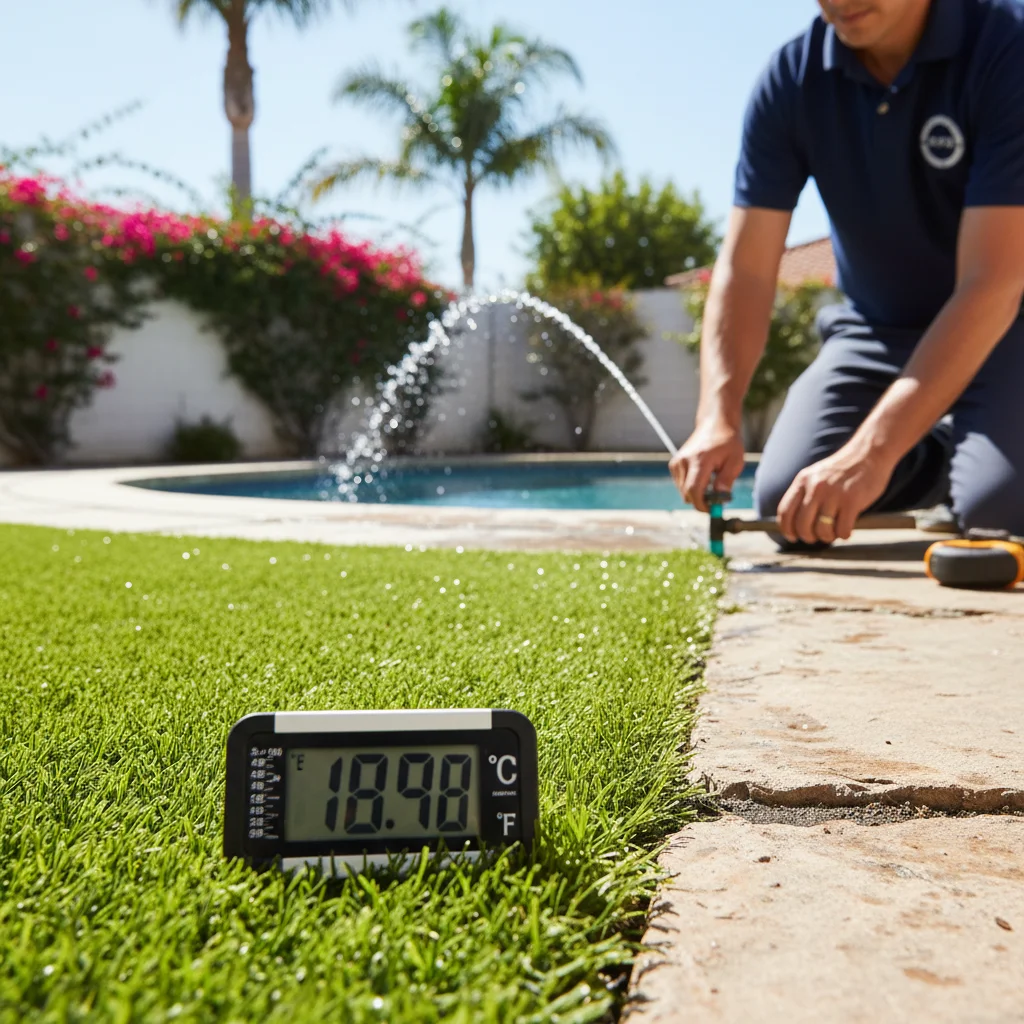
When people ask, “How hot does artificial turf get?”, they’re usually wondering if it’s too hot for bare feet or pets. On a typical 80-degree Fahrenheit San Diego day, artificial turf exposed to direct sunlight can reach surface temperatures between 120°F and 160°F. In hotter conditions, like a 90°F+ afternoon, it’s not uncommon for these temperatures to climb even higher, sometimes approaching 170°F or more.
Compare this to natural grass, which might only be 20-30 degrees warmer than the ambient air temperature due to its natural cooling. The difference is significant, and it’s why people notice it. Our own tests in San Diego backyards using infrared thermometers confirm these figures. We’ve seen turf surface temperatures easily surpass the ambient air temperature by 50-70 degrees during peak sun hours in July.
This information isn’t meant to deter you from artificial turf. Instead, it highlights the reality so you can plan effectively, especially if you have pets or small children. They might be more sensitive to hot surfaces. The goal is to install a turf system that balances aesthetics, water efficiency, and comfort for your specific lifestyle. The good news is that these high temperatures are usually localized to the turf surface and don’t significantly raise the ambient air temperature of your entire yard. They’re also manageable with simple, practical strategies.
Which types of turf and infill stay coolest?
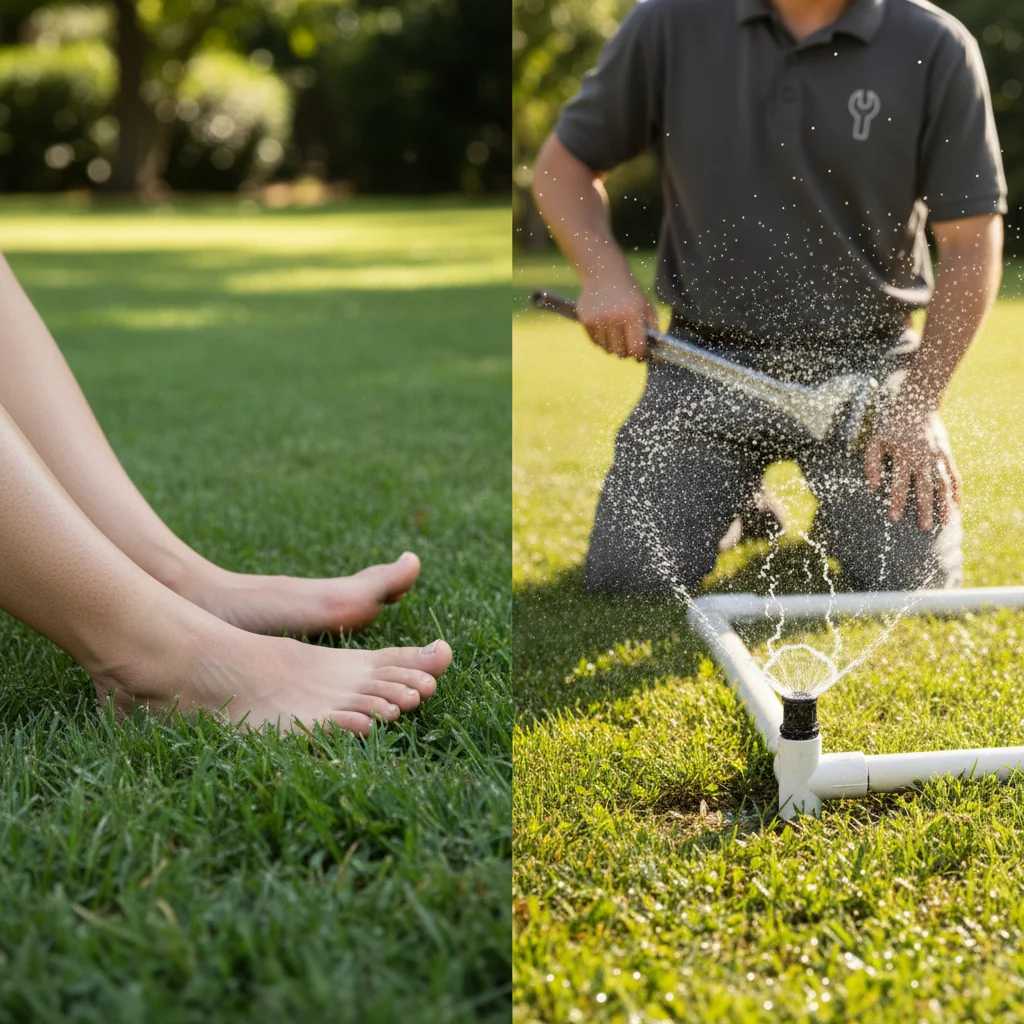
Not all artificial turf systems perform the same when it comes to heat retention. The specific materials, color, and density of the turf fibers can all influence how hot it gets. Lighter shades of green tend to absorb less heat than darker ones, though the difference in temperature is often subtle.
More importantly, the type of infill you choose makes a significant difference. Infill material sits between the turf blades, supporting them and providing cushioning. Some infills are specifically engineered with cooling properties to help combat heat absorption.
T°Cool Infill
This is a top-tier option for heat reduction. T°Cool works by absorbing moisture, either from rain, dew, or a quick misting, and then slowly releasing it through evaporative cooling. This process can reduce turf surface temperatures by 30-50 degrees Fahrenheit, making it significantly more comfortable even on the hottest San Diego days. It’s particularly effective for homes with children or pets who spend a lot of time on the lawn.
ZeoFill or Envirofill
These infills offer good performance and are popular choices. ZeoFill is a natural zeolite that helps with odor control, especially for pet turf, and provides moderate cooling benefits. Envirofill is a coated silica sand that resists compaction and has a rounded, non-abrasive shape, making it comfortable underfoot. While not as dramatically cooling as T°Cool, both are excellent, durable options that are superior to traditional infills.
Traditional rubber crumb infill, while offering good cushioning, can actually absorb and retain more heat. For this reason, we generally recommend alternative infills designed for cooler temperatures, especially in San Diego’s sunny climate. Choosing the right infill is a critical part of your artificial turf installation planning. We can help you understand the pros and cons of each, ensuring you get the best solution for your yard. You can learn even more about specific options in our detailed guide on turf infill types explained.
Practical ways to cool your turf down quickly
Even with the coolest infill, there are times in San Diego when you might want to bring the temperature of your artificial turf down quickly. The good news is that it’s easy and effective to do.
A Quick Mist: The simplest and most effective method is a light misting with water. A garden hose or a sprinkler system running for just a minute or two can reduce the surface temperature dramatically, often by 30-60 degrees, within moments. The water evaporates quickly, carrying heat away from the turf, much like our skin cools when we sweat. This evaporative effect is even more pronounced with cooling infills like T°Cool, which are designed to actively use the moisture for prolonged cooling.
Strategic Shading: Consider adding shade elements to your yard. A retractable awning over a patio, a strategically placed shade sail, or even the planting of deciduous trees can provide significant relief to turf areas during peak sun hours. Even temporary shade from a large patio umbrella during playtime can make a big difference in comfort.
Timing Your Use: If your turf is in full sun without active cooling, simply adjust when you use the area. The hottest part of the day is usually between 1 PM and 4 PM in San Diego. Planning playtime or pet activities for mornings or late afternoons can help you avoid the peak heat.
Footwear: For adults, wearing shoes or sandals when walking on turf during hot parts of the day is always a good idea, just as you would on any hot patio or sidewalk. This removes the direct contact issue and keeps you comfortable. These practical steps let you enjoy your beautiful, low-maintenance artificial turf all year long, even when the San Diego sun is at its most intense.
Is it still comfortable for pets and kids in summer?
This is often the primary concern for San Diego families considering artificial turf. The short answer is yes, artificial turf can absolutely be comfortable for pets and kids in the summer, provided you plan for heat management.
Without intervention, hot turf can certainly be uncomfortable, and even unsafe, for bare feet, paws, and delicate skin. Just like asphalt or concrete, prolonged contact with very hot surfaces can lead to burns. We never recommend letting pets or children play unsupervised on uncooled turf during peak summer heat.
However, with the right approach, you can create a safe and enjoyable space:
- Cooling Infill: As discussed, investing in a cooling infill like T°Cool is the best preventative measure. It provides continuous, passive cooling through evaporation, keeping the turf significantly cooler from the outset.
- Misting Before Play: A quick spray down before the kids or pets go out to play instantly cools the surface to a comfortable temperature. The evaporative effect lasts long enough for a good play session.
- Shaded Areas: Designating shaded areas for play can also help immensely. Many homeowners integrate their turf with covered patios or shaded spots under trees.
- Paw Protection: For very sensitive pets, or during extreme heat waves, paw booties can offer extra protection, though with proper cooling, they are often unnecessary.
Ultimately, the goal of Green Pro Turf San Diego is to ensure your new lawn is not only beautiful and water-efficient but also a safe and comfortable environment for your entire family. We specialize in artificial turf installation tailored to San Diego’s unique climate, helping you choose the best products and design to mitigate heat concerns.
When to call us
Considering artificial turf for your San Diego home? Don’t let heat concerns deter you. Our experts can walk you through all the options for turf types, cooling infills, and installation techniques to ensure your new lawn is perfectly suited for our sunny climate. Call us at (858) 925-5546 for a same-day estimate.