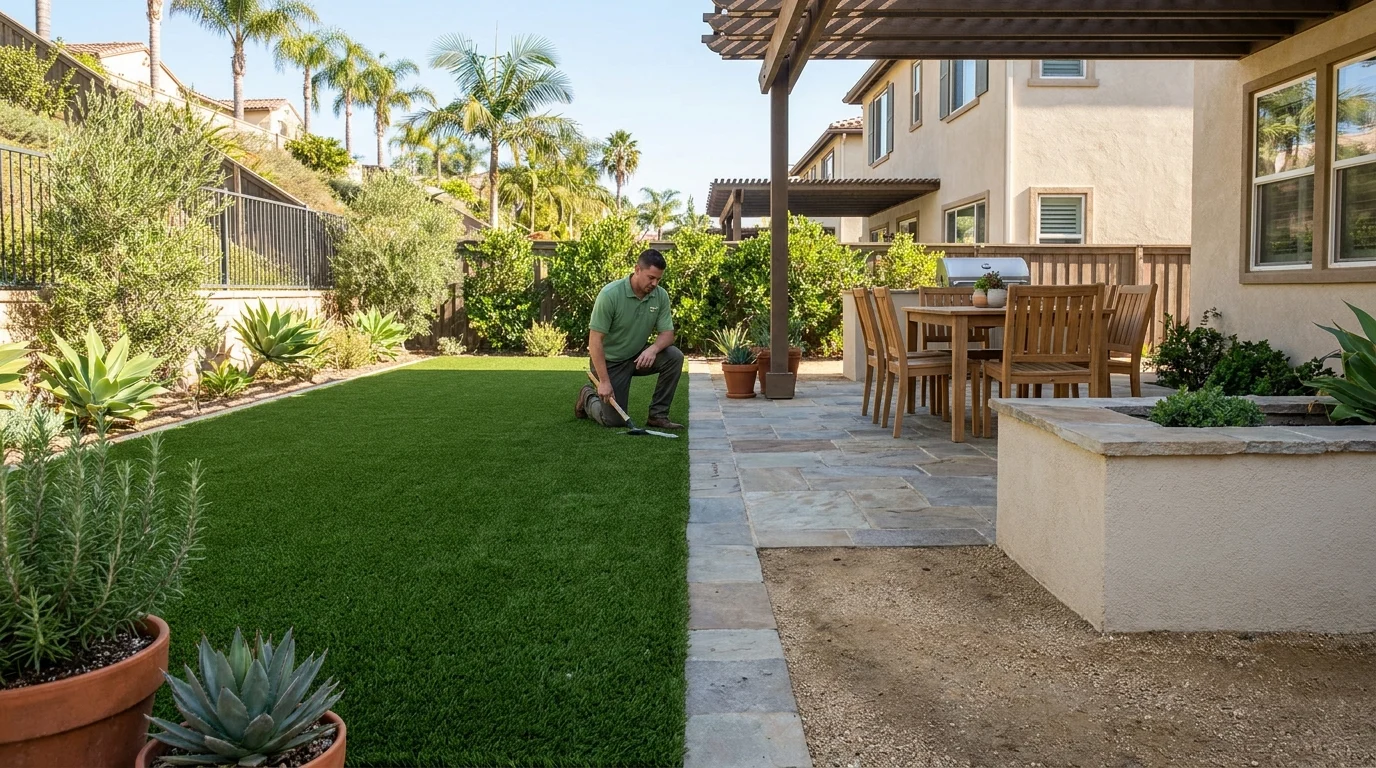
Artificial turf saves real water, stays green through droughts, and cuts your weekend yard work to nearly nothing. The honest trade-offs are upfront cost, heat in full sun, and the fact that it’s not a living ecosystem. Whether those trade-offs are worth it depends entirely on how you use your yard.
The crews we send install turf across San Diego County every week. We’ve seen it be a genuinely great fit for some yards and the wrong call for others. Here’s the full picture.
The pros
Water savings that add up fast
The average San Diego lawn drinks 50 to 70 gallons of water per square foot each year. Replace 500 square feet of grass with turf and you’re saving 25,000 to 35,000 gallons annually. That’s a real line item on your water bill, and it compounds every dry year.
The SoCal Water$mart turf rebate makes this math even better. The San Diego County Water Authority currently offers rebates for removing irrigated turf, which can offset a meaningful portion of your artificial turf installation cost. Check current rebate amounts before you budget, since they adjust based on funding availability.
No mowing, no fertilizing, no sprinklers to fix
This is the one homeowners mention most once they’ve lived with turf for a year. Saturday mornings stay yours. No blades to sharpen, no irrigation heads to replace after someone steps on them, no patchy brown sections after a dry stretch. The lawn looks the same in November as it does in April.
Year-round green in a region that punishes grass
San Diego’s dry summers and Mediterranean climate make maintaining healthy natural grass genuinely hard. Bermuda goes dormant and turns tan. Fescue struggles with heat and needs constant overseeding. Turf stays green without any of that seasonal management.
Better for pets and high-traffic areas
Well-installed turf drains quickly, doesn’t get muddy, and holds up to the kind of repeated foot traffic that turns a natural grass yard into a dirt patch. Our pet turf installation uses infill with antimicrobial properties and a drainage layer designed specifically for dogs. The surface stays clean with a rinse, not a resod.
Fits San Diego’s water conservation picture
The county’s periodic drought restrictions make keeping natural grass green feel like fighting the calendar. Turf sidesteps that entirely. Some HOAs still have rules about turf aesthetics, so check yours before committing, but the regulatory direction in Southern California has favored turf conversions for years.
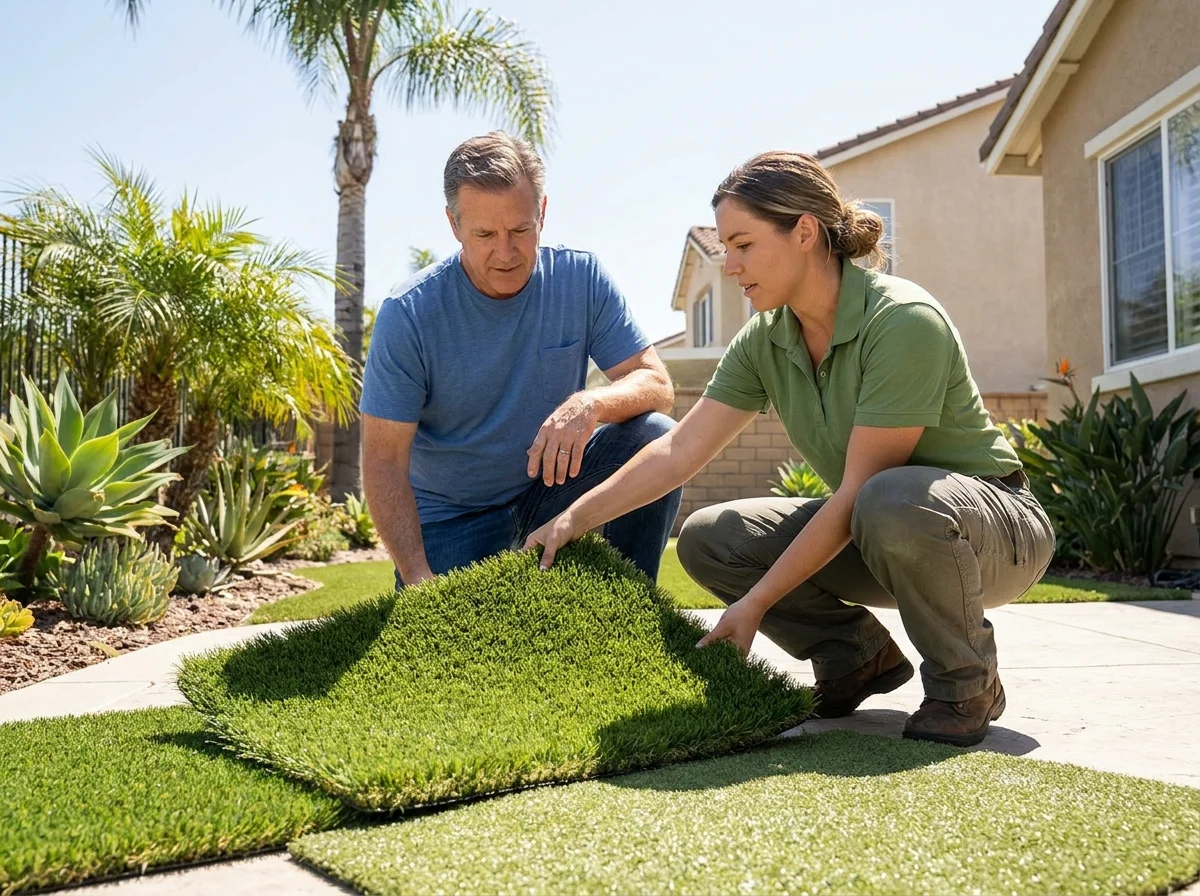
The cons
Heat in full sun is real
This is the one we hear about most from people who didn’t expect it. Artificial turf surface temperatures run 30 to 50 degrees Fahrenheit above ambient air temperature in direct sunlight. On a 90-degree afternoon in El Cajon or Santee, the turf surface can reach 130 to 140 degrees. That’s too hot for bare feet and uncomfortable for dogs.
We cover this in detail in our post on how hot artificial turf gets in San Diego. The short version: shade from trees, pergolas, or shade sails makes a significant difference. Coastal yards in Encinitas or Carlsbad where morning marine layer keeps temps moderate have a much smaller heat problem than inland yards baking in afternoon sun. If your yard is south-facing with zero shade in a hot inland zip code, heat is a serious consideration.
Upfront cost is higher than sod
Installed artificial turf in San Diego runs roughly $9 to $20 per square foot, depending on turf quality, base prep, and yard complexity. A 500-square-foot backyard turf project typically lands between $4,500 and $10,000. That’s a real upfront number. Natural sod costs less to install, though it costs more to maintain over time.
Use our turf cost calculator to get a ballpark for your specific square footage. Most homeowners who compare 10-year total cost of ownership find turf comes out ahead, but the break-even point is usually somewhere between year five and year eight depending on your water rates and maintenance habits.
It’s not a living habitat
This one matters to some homeowners more than others, and we’d rather be straight about it. Natural grass supports soil microbes, insects, and birds in ways that synthetic turf simply doesn’t. If you want pollinators in your yard or you’re focused on soil health, turf isn’t the answer. It’s a surface, not an ecosystem. Some homeowners solve this by converting lawn to turf and adding native plant beds along borders, which gives them the low-maintenance surface and some habitat.
Infill needs occasional attention
Most quality turf installs use infill, typically crumb rubber, sand, or organic alternatives like cork or walnut shell. Over years, infill can compact or shift, which affects how the turf looks and how well it cushions impact. A good installation lasts without much attention, but you’ll want to brush the fibers upright and redistribute infill every year or two, especially in high-traffic zones.
Lifespan is finite
Quality artificial turf installed correctly lasts 15 to 20 years in San Diego’s climate. UV exposure and foot traffic are the main factors. When it reaches end of life, you’re replacing the whole surface. That’s a real cost to plan for. We cover what affects turf longevity in our post on how long artificial turf lasts in San Diego.
Who it’s right for
Turf tends to be a strong fit if you have kids or dogs who tear up natural grass, if your yard is in full or partial shade and stays reasonably cool, if you’re tired of irrigation maintenance, or if your water bill is a genuine pain point. Coastal San Diego yards in Encinitas, Del Mar, or La Jolla see less heat stress and often look better longer than inland installs.
It also works well for low-use decorative areas, side yards, and front yards where you want curb appeal without ongoing care. Our artificial turf installation guide for San Diego covers what preparation looks like for different yard types.
Turf is probably not the right call if your yard is south-facing with no shade in a hot inland city and you want kids or pets outside barefoot on summer afternoons. It’s also a harder fit if habitat and soil health are important to you, or if you’re working with a short timeline before selling and don’t want a capital project.
Common questions
Does turf qualify for the Water$mart rebate in San Diego?
Yes. The San Diego County Water Authority’s Water$mart program currently offers rebates for removing irrigated grass and replacing it with turf or drought-tolerant landscaping. Rebate amounts per square foot shift as funding levels change, so check the current program before you finalize your budget. We can help document square footage for your rebate application.
How does turf compare to sod over 10 years?
Sod costs less upfront. Turf costs less over time. The math depends on your water rates, irrigation maintenance costs, and how intensively you maintain natural grass. For most San Diego homeowners, turf reaches break-even somewhere between year five and year eight. Compare artificial turf vs. sod for a more detailed cost and maintenance breakdown.
Is there a turf option that stays cooler?
Shade is the most effective solution. Some turf products use lighter-colored fibers or infill materials that reflect more heat, which helps at the margins. But no turf product eliminates the heat differential in direct full sun. If heat is your primary concern, a cooler-colored turf product combined with a pergola or shade structure gives you the best result.
What maintenance does turf actually need?
Less than natural grass, but not zero. You’ll want to rinse pet areas regularly and brush high-traffic zones to keep fibers upright. Every year or two, top off infill if it’s compacted. Remove debris like leaves before they decompose into the pile. A leaf blower handles most of it in under 10 minutes. There’s no mowing, no fertilizing, and no irrigation system to maintain.
If you’re weighing turf for a specific yard and want a straight answer about whether it makes sense, we’re happy to take a look. Call us at (858) 925-5546 or request a free estimate. We’ll tell you honestly what will and won’t work for your space.