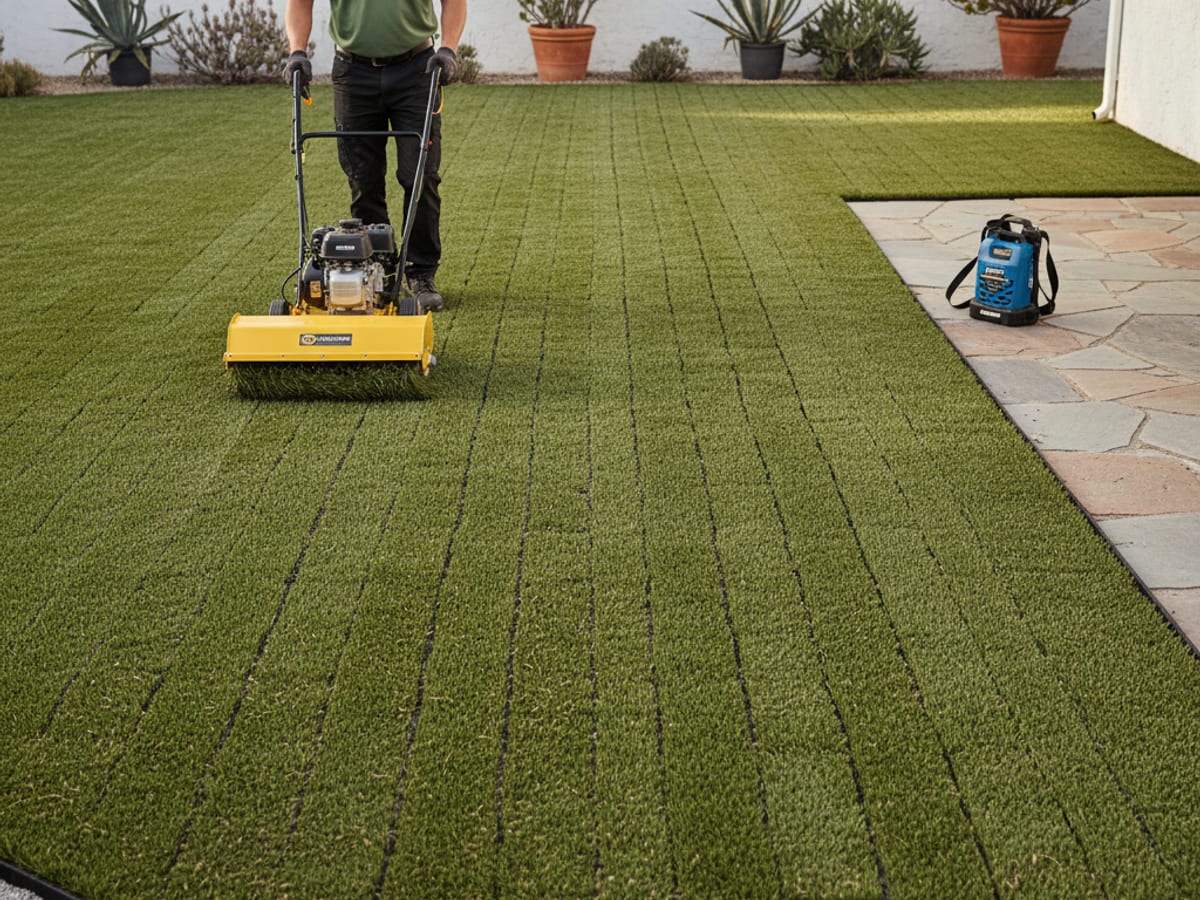
To clean artificial turf in San Diego, rinse it with a hose every week or two, brush the blades upright with a stiff broom, pick up leaves and pet waste as they land, and rinse pet spots more often in summer heat. That’s the whole routine for most yards. Deeper cleaning, like a power broom or enzyme treatment, only comes up a few times a year.
The basic routine most San Diego yards need
Turf doesn’t need much. The mistake people make is treating it like a lawn or ignoring it completely. Neither works. Here’s the rhythm that keeps a yard looking new.
Rinse every week or two. A garden hose knocks off dust, pollen, and our marine-layer grit. Coastal yards in Encinitas or Carlsbad get more salt and fog residue, so rinse those weekly. Drier inland yards in El Cajon or Santee can stretch to every couple of weeks.
Brush the blades. Foot traffic flattens turf over time. A stiff-bristled push broom, run against the direction of the blades, stands them back up. Do high-traffic paths monthly. Never use a metal-bristle brush. It shreds the fibers.
Clear debris fast. Rake or blow off leaves, jacaranda blooms, and bougainvillea petals before they break down and stain. A plastic leaf rake or a leaf blower on low works. Avoid metal rake tines.
Pick up pet waste daily. Solid waste left on turf is the single biggest source of smell. We cover the full pet routine below.
Why San Diego heat changes how you clean
Surface temperature is the part most national guides skip. Artificial turf in direct San Diego sun can hit 140 to 160°F on a hot inland afternoon, far hotter than the air. That heat does two things to cleaning.
First, it bakes anything left on the surface. Urine, spilled juice, dropped fruit, and bird droppings all set faster and smell stronger in heat. Same-day rinsing matters more here than it does in a mild climate.
Second, it makes midday cleaning miserable and less effective. Water evaporates before it does much. Rinse in the early morning or evening when the turf is cool. The water soaks in, lifts residue, and actually drains.
If your yard runs hot and you’re rinsing constantly to manage smell, the real fix may be infill, not water. We cover that in our guide to how hot artificial turf gets in San Diego.
Pet turf: the routine that actually stops odor
Dog urine doesn’t smell much when it’s fresh. The smell shows up as urea breaks down into ammonia over hours, and heat speeds that up. Three habits keep a pet yard fresh.
Rinse pet zones every two or three days in summer, weekly in winter. A plain water rinse flushes urine down through the backing before it concentrates. This is the highest-value habit for any dog owner.
Pick up solid waste daily. Bacterial breakdown of solid waste adds more odor than urine does. No exceptions in heat.
Use an enzyme cleaner monthly or quarterly. Enzyme or turf-specific deodorizers break down the compounds a plain rinse leaves behind. Avoid bleach and ammonia-based cleaners. They don’t fix the source and can discolor blades.
If you’re rinsing on schedule and the yard still smells, the install likely used the wrong infill. Silica sand holds urine instead of binding it. Zeolite, a volcanic mineral, chemically traps ammonia the way cat litter does. Our pet turf odor control guide walks through swapping infill on an existing yard.
Stains, spills, and the stuff that won’t rinse off
Most spills lift with warm water and a drop of mild dish soap, worked in with a soft brush and rinsed clear. For the stubborn ones:
| Problem | What to use | What to avoid |
|---|---|---|
| Grease, oil, sunscreen | Mild dish soap + warm water | Solvents, acetone |
| Sticky residue (gum, sap, tar) | Ice to harden, then scrape with a plastic edge | Knives, metal scrapers |
| Dried pet stains | Enzyme turf cleaner, let it dwell, rinse | Bleach, ammonia |
| Bird droppings, hard water spots | White vinegar diluted 1:1 with water, rinse | Pressure washer up close |
| Mold or algae (shaded coastal yards) | 1:1 vinegar-water or turf-safe cleaner | Harsh chlorine bleach |
A pressure washer can be used, but only on a wide fan tip held well back. Up close it blasts infill out of the turf and frays the blades. For most homeowners a hose with a strong nozzle is safer and plenty.
Drainage care: the rainy-season checklist
San Diego stays dry most of the year, so drainage problems hide until the rare heavy storm rolls in. Properly installed turf drains through a permeable backing into an aggregate sub-base, so puddling means something is blocked.
Before our winter rains, do a quick check. Clear leaves and infill buildup from the low edges and any drain points. Brush compacted high-traffic areas so water can pass through instead of pooling. If water still sits on the surface more than a few minutes after a rinse, the backing or sub-base may be clogged or was under-built. That’s a repair call, not a cleaning fix.
Coastal yards under heavy tree cover collect the most organic debris, which is the usual culprit. Inland yards see it less but get hit harder when a storm finally lands.
HOA yards: keep it clean to stay compliant
If you’re in an HOA, “well maintained” is often written into the rules, and turf is judged the same as a live lawn. California law protects your right to install drought-tolerant landscaping, including artificial turf, but it doesn’t excuse a neglected yard.
Keep blades brushed upright, edges clean and defined, and seams flat. A flattened, debris-strewn, or stained turf yard is what draws an HOA notice. A clean one rarely does. If you’re navigating approval or upkeep standards, see our California HOA artificial turf rules guide.
A simple maintenance schedule
- Weekly to biweekly: hose rinse, pick up debris, daily pet-waste pickup
- Monthly: brush high-traffic areas upright, spot-treat stains
- Quarterly: enzyme treatment on pet zones, full brush-up
- Before winter rains: clear drains and low edges, check for puddling
- Yearly: power-broom deep clean and infill top-up as needed
Most homeowners handle the weekly and monthly work themselves. The quarterly and yearly steps, plus any drainage or infill issue, are where a professional turf cleaning makes sense.
Frequently asked questions
How often should I clean artificial turf in San Diego? Rinse every one to two weeks, weekly for coastal yards and pet zones. Brush high-traffic areas monthly. Deep clean once a year.
Can I pressure wash artificial turf? Yes, carefully. Use a wide fan tip held well back. Up close it strips infill and frays blades. A strong hose nozzle is safer for most yards.
What removes dog urine smell from turf? A consistent rinse routine plus a monthly enzyme cleaner. If smell persists, the infill is likely the problem. Zeolite infill binds ammonia where silica sand can’t.
Will turf get moldy in coastal San Diego? It can in deeply shaded, damp coastal spots. A 1:1 vinegar-water rinse handles light mold or algae. Good drainage and sun exposure prevent most of it.
Do I need special cleaning products? Usually no. Water, a stiff broom, and mild dish soap cover most cleaning. Keep an enzyme deodorizer on hand for pet yards.
Does cleaning affect the rebate I got? No. SoCal WaterSmart and water-agency turf rebates are tied to the install, not upkeep. Cleaning just protects the investment you already made.
Get help with the deep stuff
Weekly rinsing is on you. The rest doesn’t have to be. If your turf is smelling, draining poorly, or due for a yearly deep clean and infill top-up, we handle it across San Diego County with upfront quotes and no guesswork. Call Green Pro Turf San Diego at (858) 925-5546.