Install artificial turf on concrete or patio
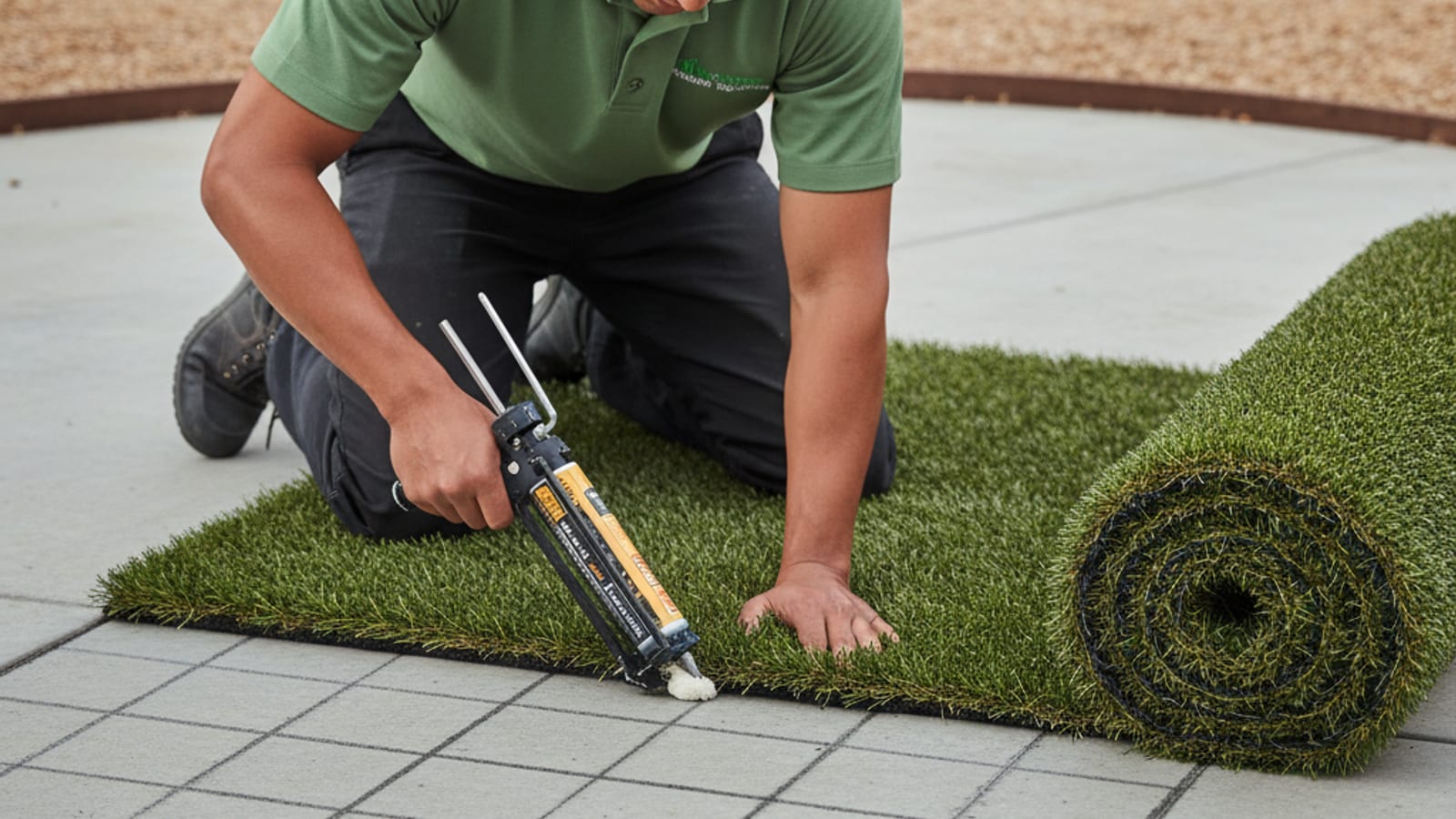
Patio turf is glued, not staked. The trick is drainage and the right adhesive.
What you'll learn
- How to test concrete for moisture before adhesive
- Where to punch drainage holes in turf backing
- The polyurethane adhesives rated for outdoor heat
- How to keep edges from lifting in onshore wind
Step by step
- Pressure-wash and let concrete dry fully (24+ hours).
- Lay turf and trim to size. Mark edges.
- Punch drainage holes in the turf backing where puddling could occur.
- Apply outdoor polyurethane adhesive in a continuous bead at edges and grid pattern across.
- Roll turf, weight overnight, trim final edges in the morning.
Safety note
Skip the cheap latex glues sold at hardware stores. They fail in San Diego summer heat within a year. Use a marine-grade or outdoor-rated polyurethane only.
Rather have a pro handle it?
Professional artificial turf installation across San Diego County. A real installer picks up.
More guides
Keep learning.
Basics · 6 min watch
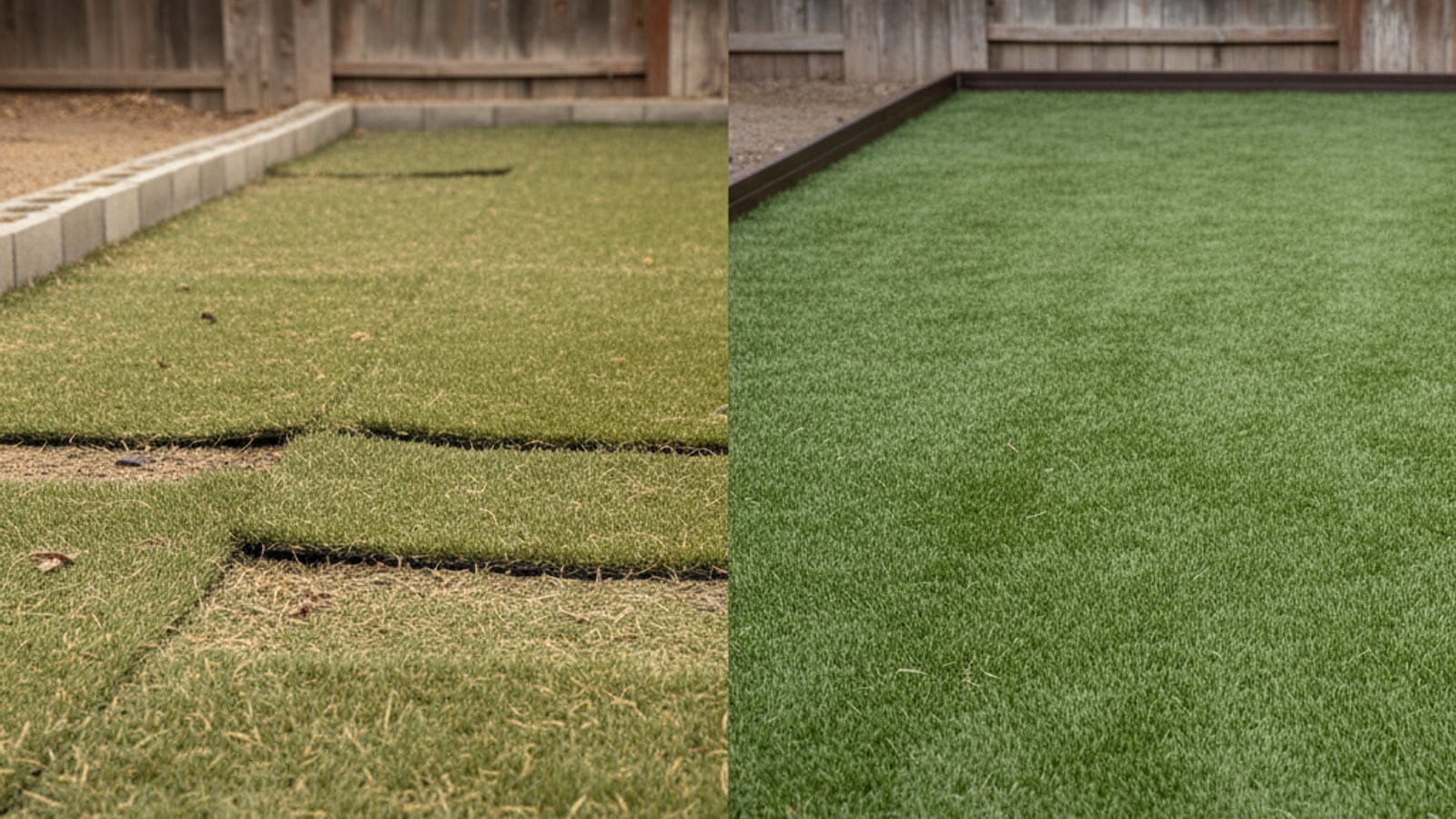
DIY artificial turf install vs hiring a pro
DIY turf can save you 30 to 40 percent, but the failure modes are predictable and expensive.
Maintenance · 4 min watch
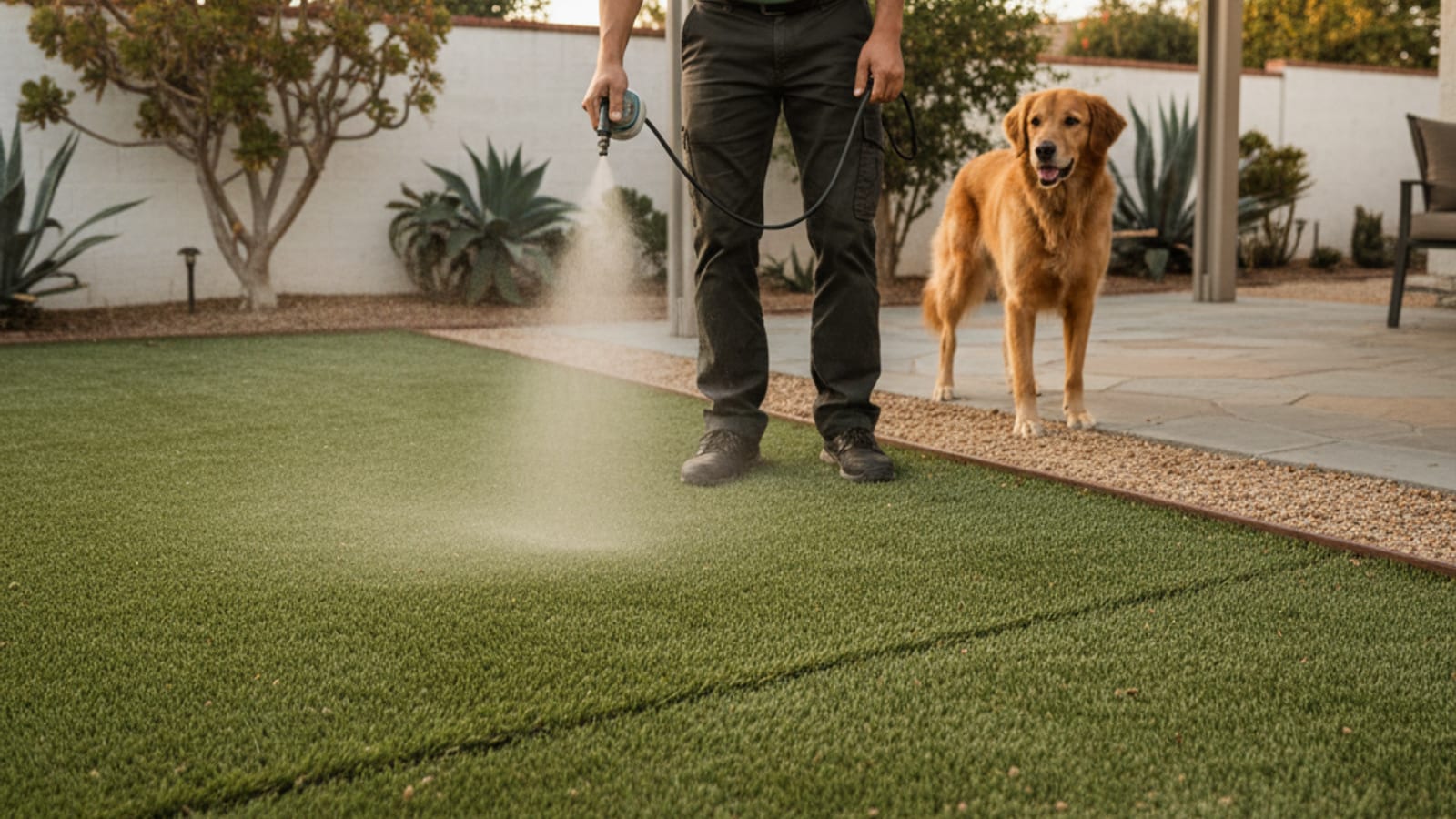
Clean pet turf and remove dog odor
In summer heat, pet turf concentrates urine fast. A weekly rinse plus quarterly enzyme treatment keeps it fresh.
Basics · 7 min watch
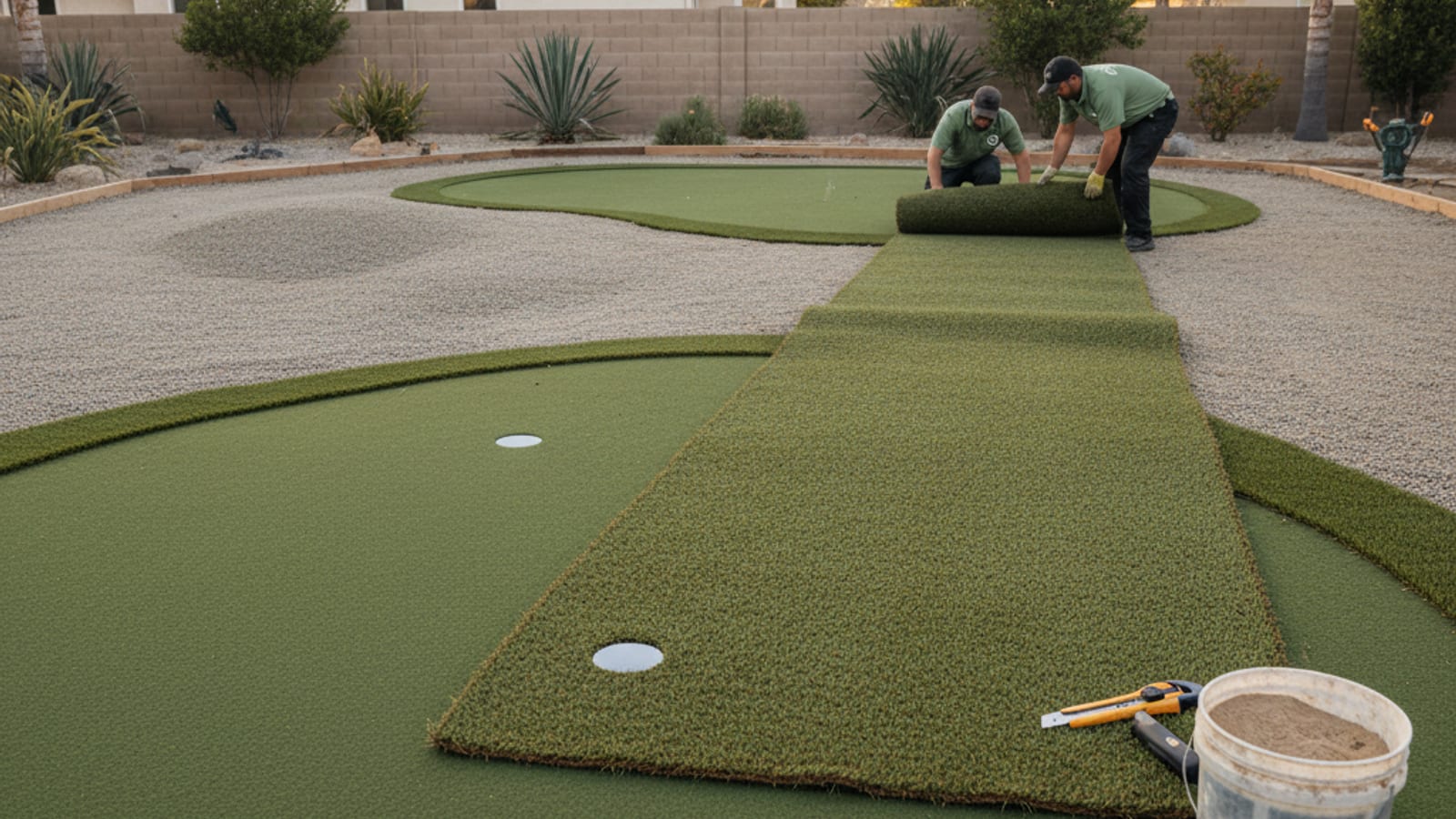
How a backyard putting green is built
A real putting surface needs proper base grade, true-roll turf, and PGA-spec cups set into the base.