DIY artificial turf install vs hiring a pro
DIY turf can save you 30 to 40 percent, but the failure modes are predictable and expensive.
What you'll learn
- When DIY makes sense (small patios, low-stakes patches)
- Where DIY usually fails: base prep, seam glue, drainage
- What tools and equipment you actually need
- Real cost comparison: DIY materials vs installed price
Step by step
- Measure the area and order 5% extra turf to account for waste.
- Excavate 3–4 inches of existing soil. Haul to dump.
- Lay class-II road base, compact in 1.5-inch lifts to 95% density.
- Roll turf with grain direction matched. Glue seams with outdoor adhesive.
- Brush in silica or zeolite infill. Power-broom finish.
Safety note
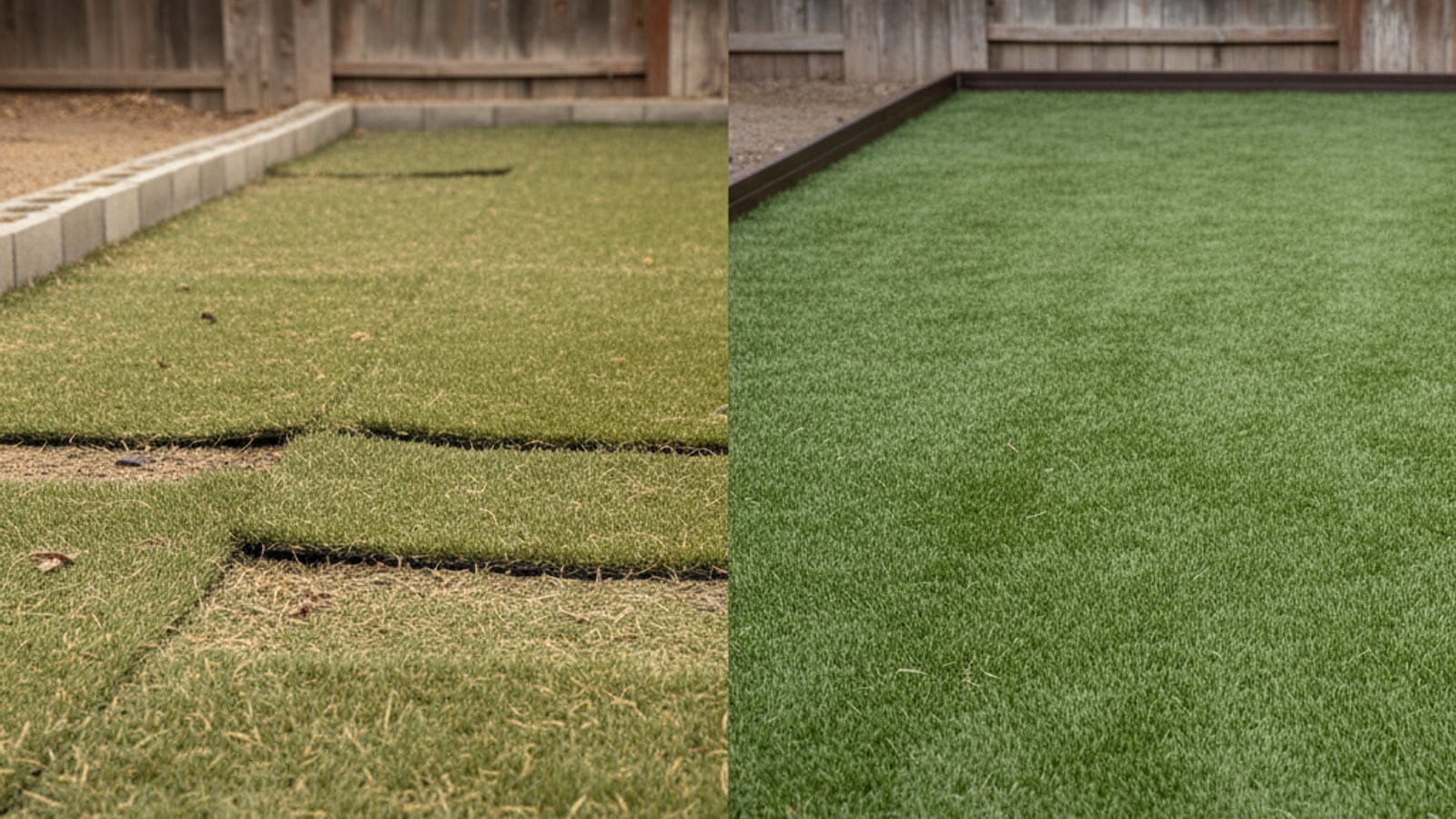
If your base is not compacted properly, the turf will show divots and seam separation within one summer. Compaction is the part DIYers most often skip.
Rather have a pro handle it?
Professional artificial turf installation across San Diego County. A real installer picks up.
More guides
Keep learning.
Maintenance · 4 min watch
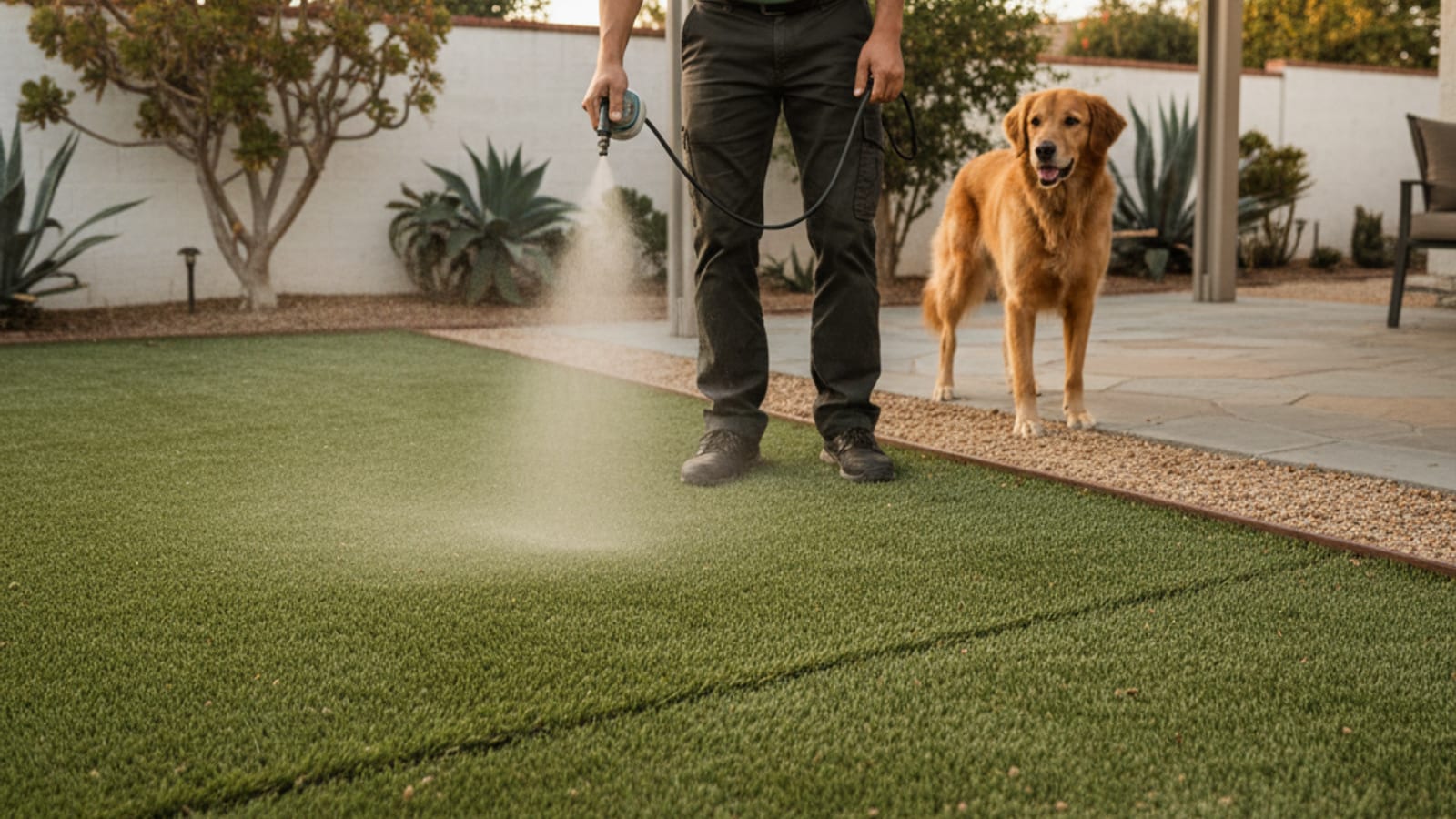
Clean pet turf and remove dog odor
In summer heat, pet turf concentrates urine fast. A weekly rinse plus quarterly enzyme treatment keeps it fresh.
Basics · 7 min watch
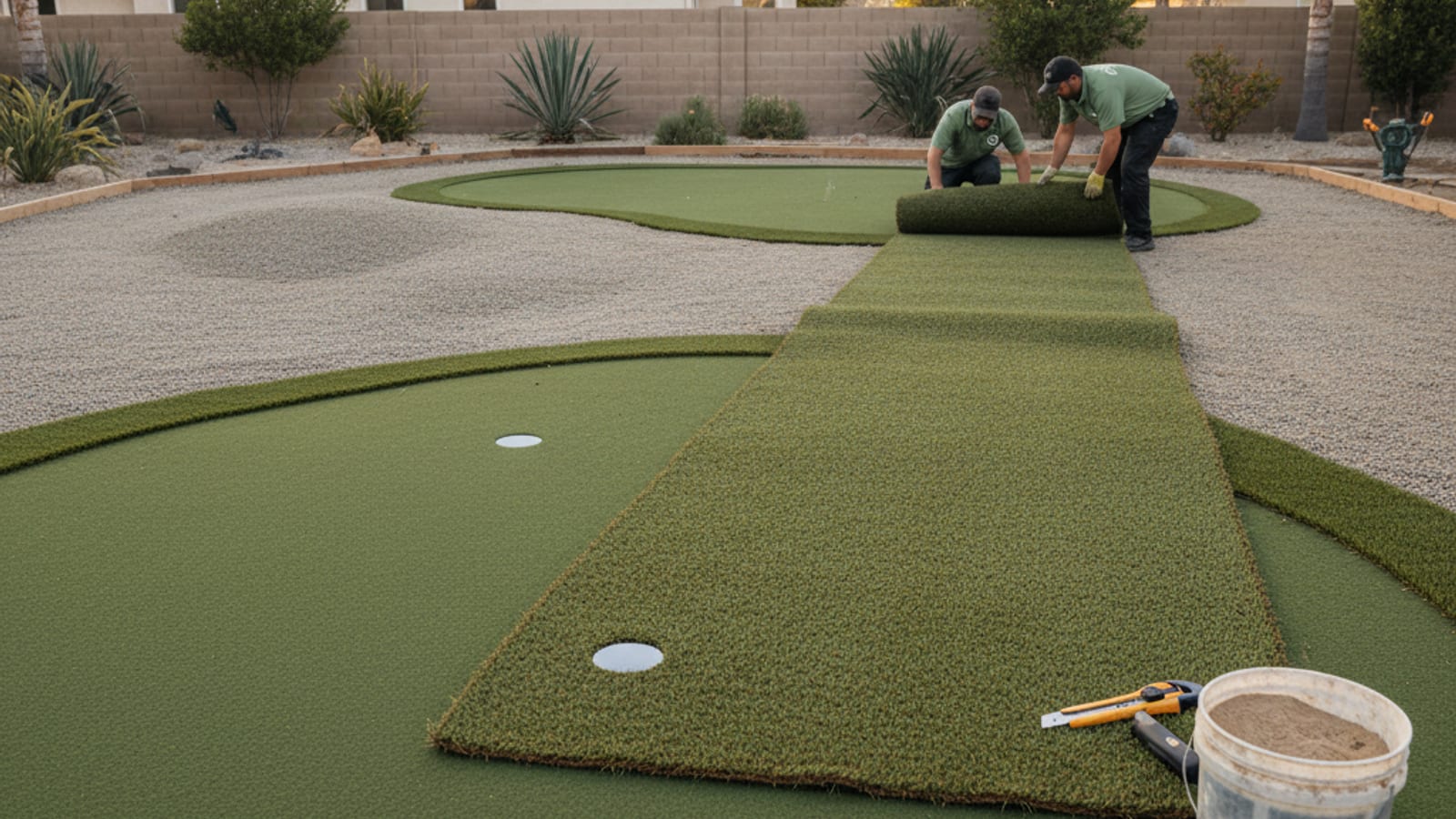
How a backyard putting green is built
A real putting surface needs proper base grade, true-roll turf, and PGA-spec cups set into the base.
Basics · 5 min watch
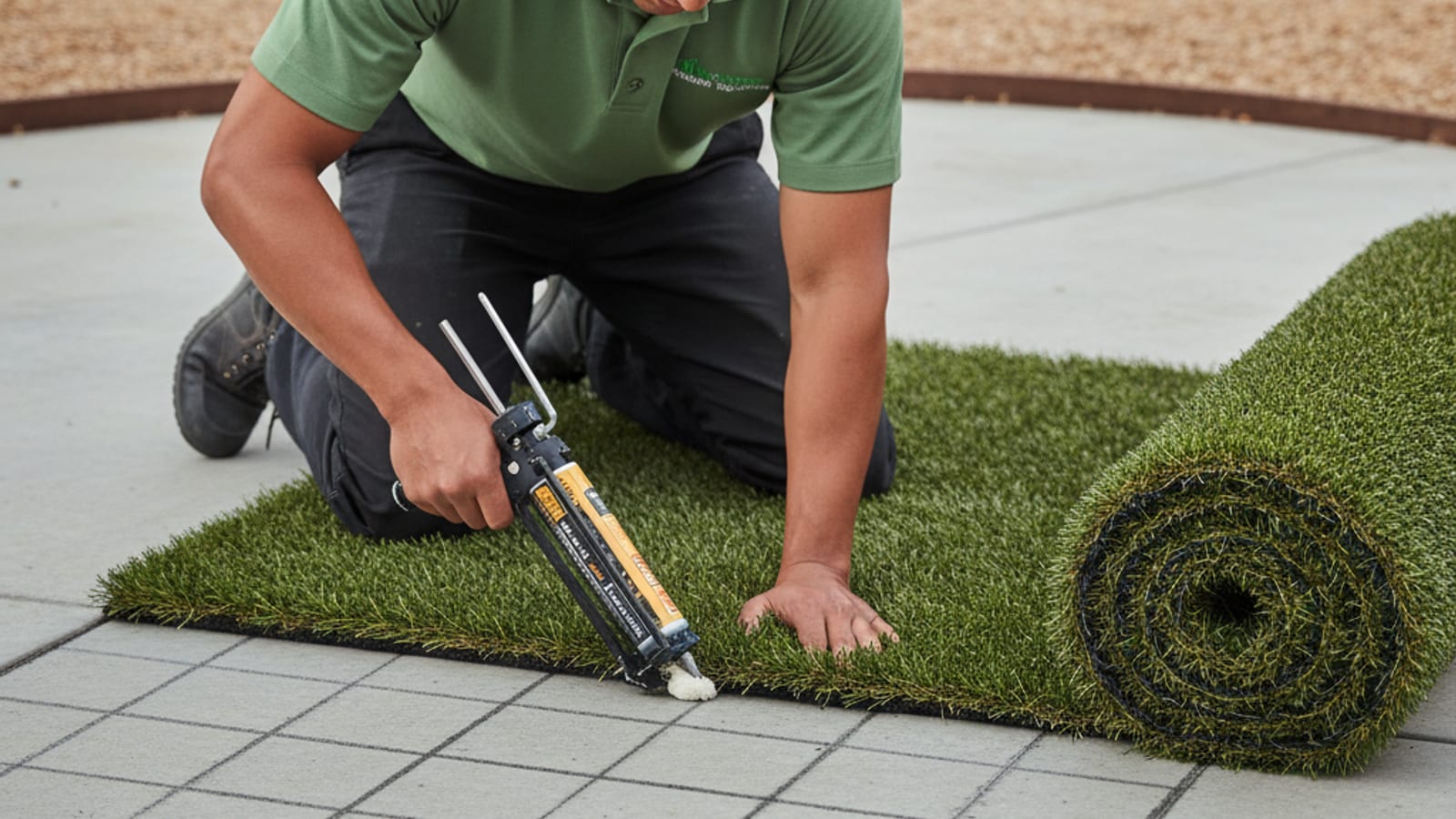
Install artificial turf on concrete or patio
Patio turf is glued, not staked. The trick is drainage and the right adhesive.